Vietnamese traditional music is deeply rooted in tonal linguistic inflections. Because the Vietnamese language contains six distinct tones, a spoken phrase is inherently musical. In no genre is this symbiotic synthesis of phonetic cadence and instrumental ornamentation more pronounced than in Ca Trù (literally: "Tally Card Songs").
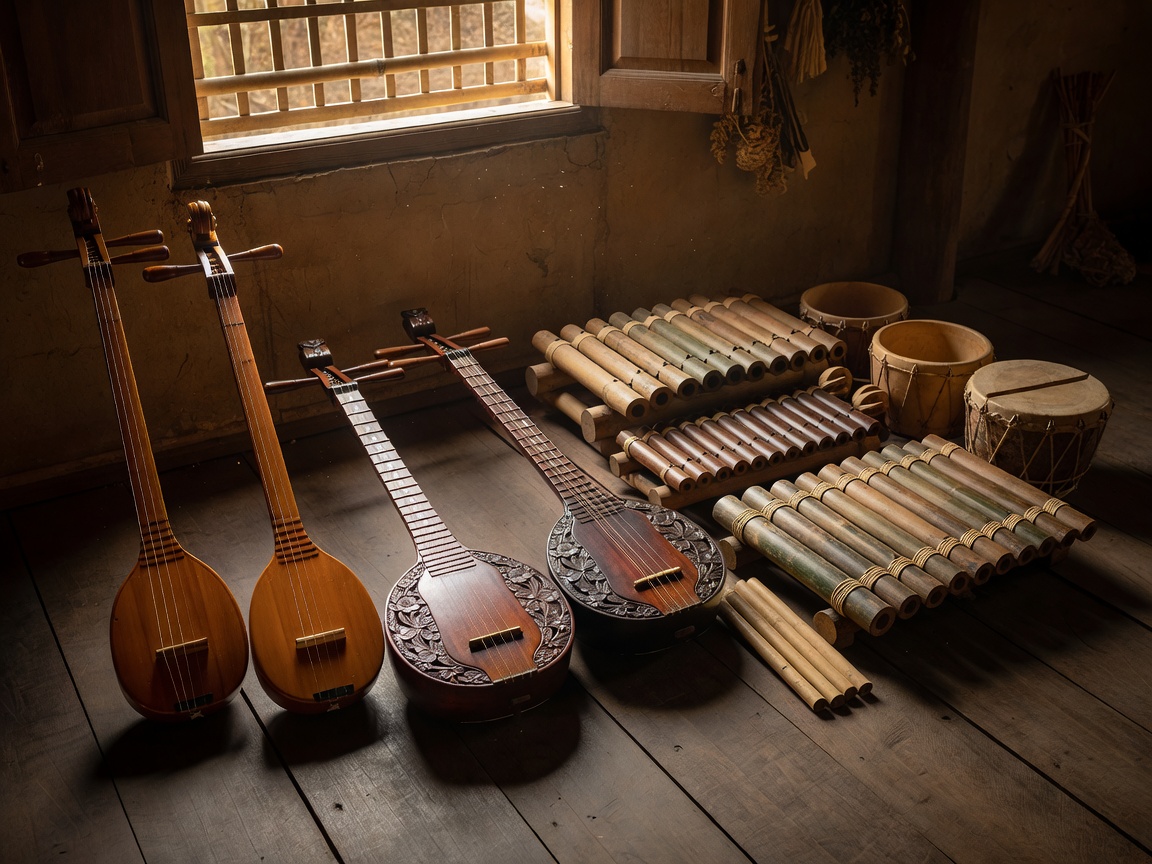
I. The Sonic Triad of Ca Trù Chamber Poetry
Inscribed on UNESCO's Urgent Safeguarding List, a traditional Ca Trù performance consists of exactly three performers seated on sedge mats in an intimate chamber:
- The Đào Nương (Female Chanteuse): Sings while simultaneously striking the Phách (a resonant bamboo clapper hit with two small wooden sticks), maintaining rhythmic polyrhythms while executing subtle vibrato and vocal glottal stops.
- The Kép (Lutenist): Accompanies on the Đàn Đáy — an ancient three-stringed, trapezoidal wooden lute with a long neck and ten frets that produces deep, mellow bass frequencies without drowning the delicate poetry.
- The Quan Viên (Scholar Guest): A poet or connoisseur who plays the Trống Chầu (Praise Drum). Using specific drum rolls (Tôm, Chát), the listener directly participates in the performance, evaluating every vocal phrase and clapper stroke in real-time.
Quan Họ Bắc Ninh: The Antiphonal Courtship Songs
In contrast to the aristocratic salons of Ca Trù, Quan Họ flourished across the villages of the Kinh Bắc region (Bắc Ninh and Bắc Giang provinces). Inscribed as UNESCO Intangible Cultural Heritage of Humanity in 2009, Quan Họ is performed by paired male singers (Liền Anh) and female singers (Liền Chị) who challenge each other in alternate, unamplified poetic dialogues on village river barges and pagoda courtyards.
II. Archival Preservation & Revival
After decades of neglect during 20th-century conflicts, ancient Ca Trù guilds (such as the Thái Hà Club in Hanoi) and rural Quan Họ brotherhoods have experienced a scholarly revival. Contemporary musicologists are actively recording master performers, transcribing oral mnemonic systems (chữ nhạc), and ensuring that this non-tempered microtonal acoustic heritage endures into the modern millennium.