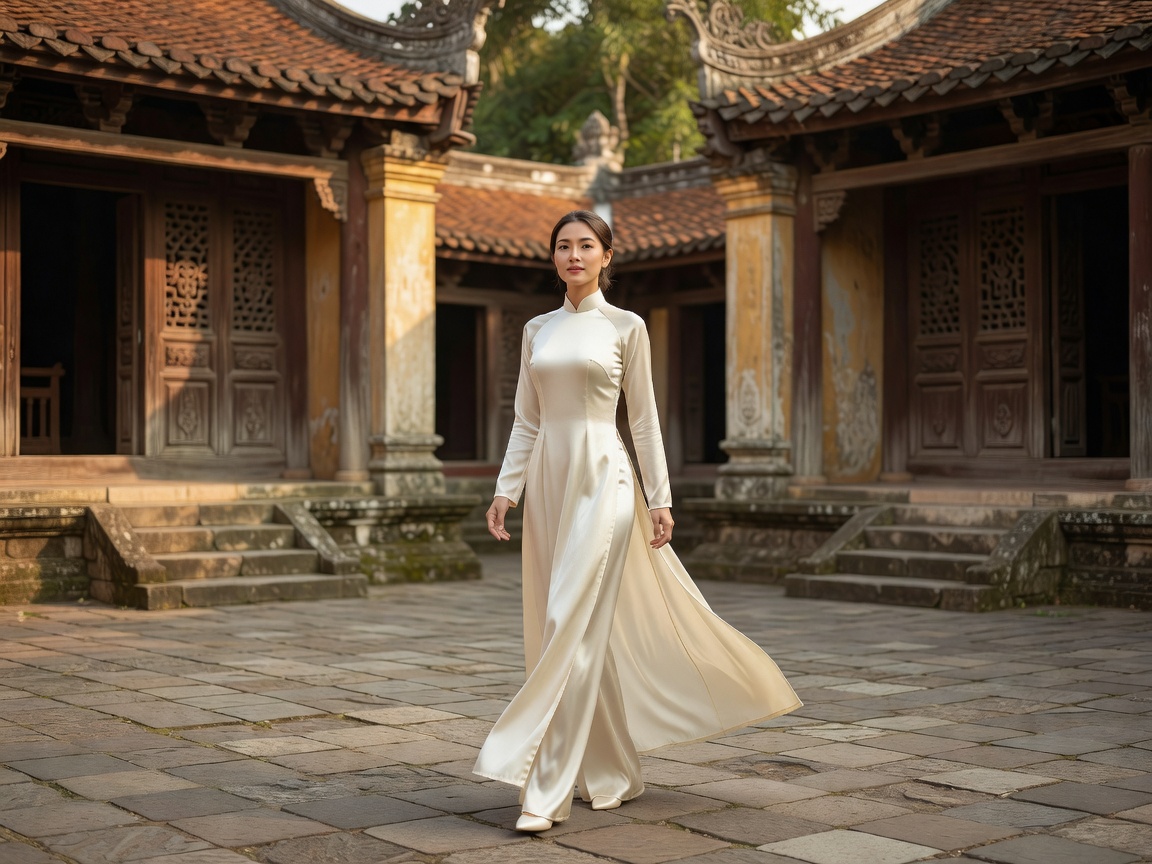
Few garments in the global history of costume encapsulate national identity with the poetic precision of the Vietnamese Áo Dài (literally: "Long Robe"). Celebrated for its unique dichotomy — simultaneously covering the entire body from mandarin collar to wrist while delicately accentuating the wearer's natural movement — the garment represents over three centuries of deliberate sartorial reform.
I. The Imperial Genesis: Áo Ngũ Thân (1744–1802)
The structural precursor to the modern Áo Dài was codified in 1744 by Lord Nguyễn Phúc Khoát of Đàng Trong (Southern Realm), seeking to distinguish his court's identity from the northern Trịnh administration. The design, known as Áo Ngũ Thân (Five-Panel Gown), was imbued with deep philosophical symbolism:
- The Five Flaps: Represented the four parents (paternal and maternal pairs) and the wearer themselves (the fifth, inner panel).
- The Five Buttons: Embodied the five primary Confucian virtues (Ngũ Thường): Nhân (Benevolence), Lễ (Propriety), Nghĩa (Righteousness), Trí (Wisdom), and Tín (Fidelity).
- Loose Cut: Designed to conceal bodily contours, prioritizing modest posture and solemnity during court rituals.
II. The 1930s Hanoi Modernist Revolution: Le Mur & Lê Phổ
In 1934, artist Cát Tường (stylized as Le Mur) along with painter Lê Phổ of the Hanoi Fine Arts College introduced a radical reinterpretation that bridged traditional Vietnamese silk drapery with Western Paris tailoring:
The Key Sartorial Innovations of Le Mur:
- Elimination of the bulky fifth panel, creating a streamlined front and back drape that extended down to the ankles.
- Introduction of the shoulder-to-armpit asymmetrical snap fasteners (Khuy Bấm), creating a sleek bust line.
- Inclusion of puff sleeves, boat necks, and refined darts along the waistline.
III. The Raglan Sleeve Innovation of 1960s Saigon
In the late 1950s and 1960s, master tailor Đỗ Trịnh (Dung Tailors in Đa Kao, Saigon) solved the historical issue of wrinkling around the armpits by introducing the Raglan sleeve cut. By running the sleeve seam diagonally from the neck to the underarm, the garment achieved unprecedented comfort and allowed the fabric to sit flawlessly across the chest without wrinkling, cementing the definitive silhouette recognized worldwide today.
IV. Contemporary Silk & Haute Couture Resurgence
Today, contemporary Vietnamese couturiers such as Minh Hạnh, Thủy Nguyễn, and Công Trí have propelled the Áo Dài into international fashion capitals, experimenting with indigenous brocades from ethnic minorities (H'Mông, Thái), lotus-fiber threads from the Mekong Delta, and hand-embroidered metallic threads inspired by Imperial Huế regalia.